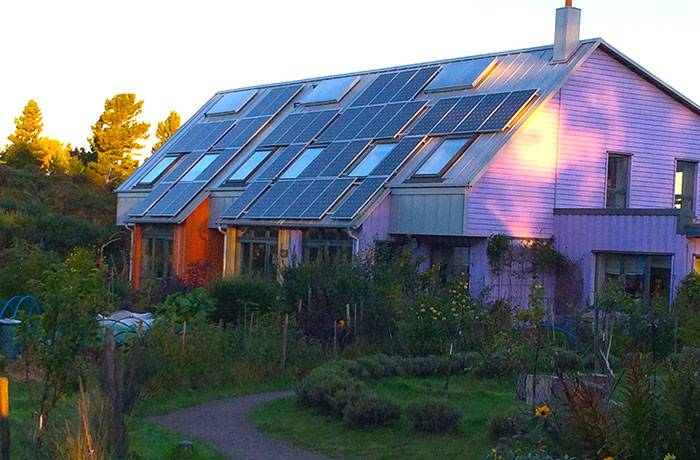
Report: Online Lecture Earthship: Home that grows out of land
Event summary and outcomes
The online lecture EARTHSHIP: Home that grows from the earth took place on March 17, 2026 (18:00-20.00), via Zoom. The session introduced participants to low-tech building principles through the example of Earthship houses. The session was delivered by Urša Koren, an architecture graduate (MA level candidate) and Earthship Academy student with experience in natural building. The session provided a structured overview of how these buildings function as self-sufficient systems, integrating heating, water management, energy production and food growing into the design of the structure itself. The event contributed to increasing awareness and understanding of holistic, low-technology approaches to housing.
Participants and demographics
72 people applied for the online session and 19 attended the event.
The event gathered a diverse group of participants, including students of architecture and environmental fields, practitioners in construction and design, as well as individuals interested in self-sufficiency and alternative ways of living. Participants joined from different European countries, reflecting a broad interest in the topic.
Key learnings and highlights
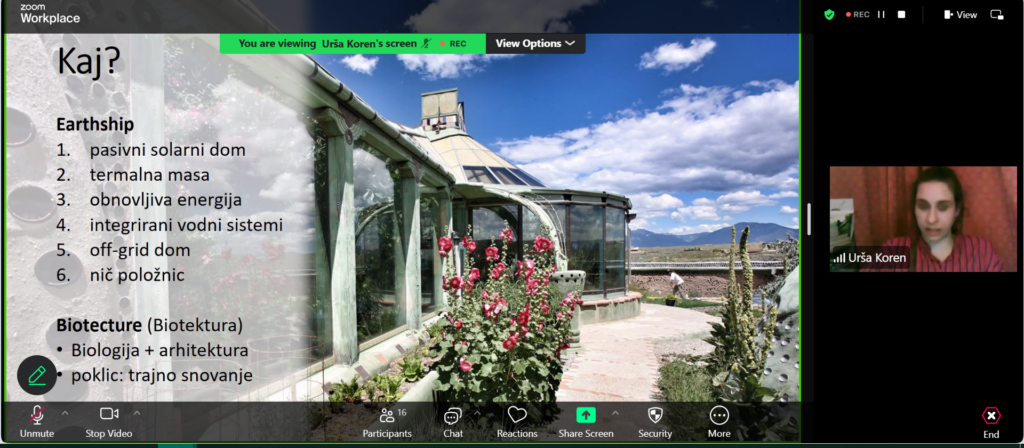
The session provided a technical deep dive into how Earthships address six basic human needs:
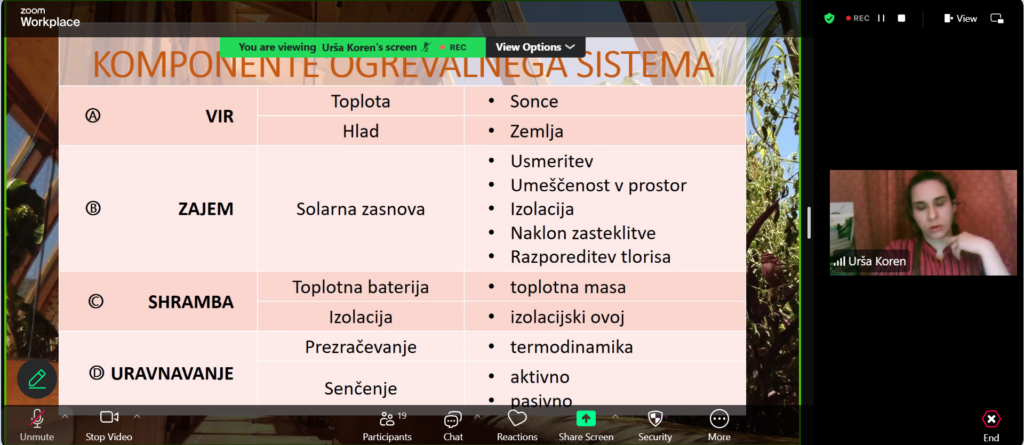
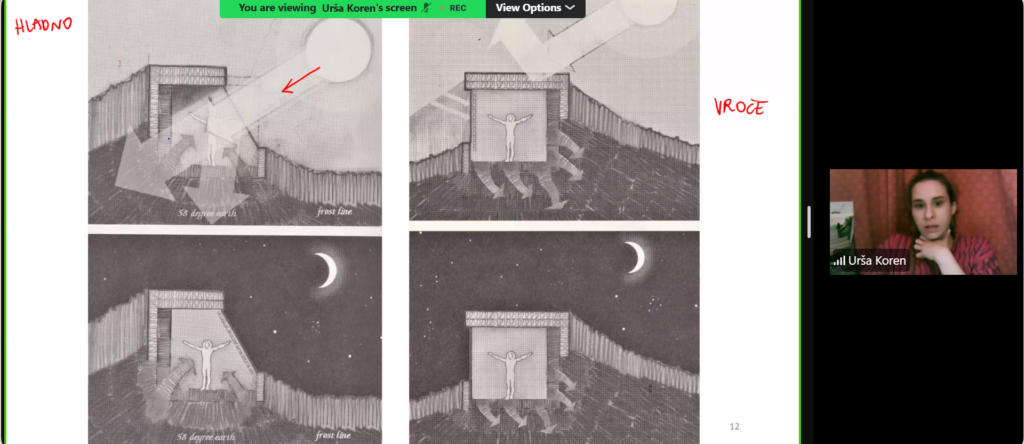
- Thermal Comfort: Earthships utilize solar orientation and “thermal mass” (rammed-earth tires). Natural cooling is managed via 9m-long, 38cm-diameter metal earth tubes, which are sloped outward for condensation drainage to ensure thermal conductivity and microbial safety.
- Water & Sewage: Managed by the Water Organizing Module (WOM), water is recycled four times. Rainwater is harvested for washing, filtered through interior Botanical Cells (which treat gray water while growing food), reused for toilets, and finally treated in septic tanks and outdoor cells.
- Energy: Electrical autonomy is achieved through solar and wind energy managed by the Power Organizing Module (POM).
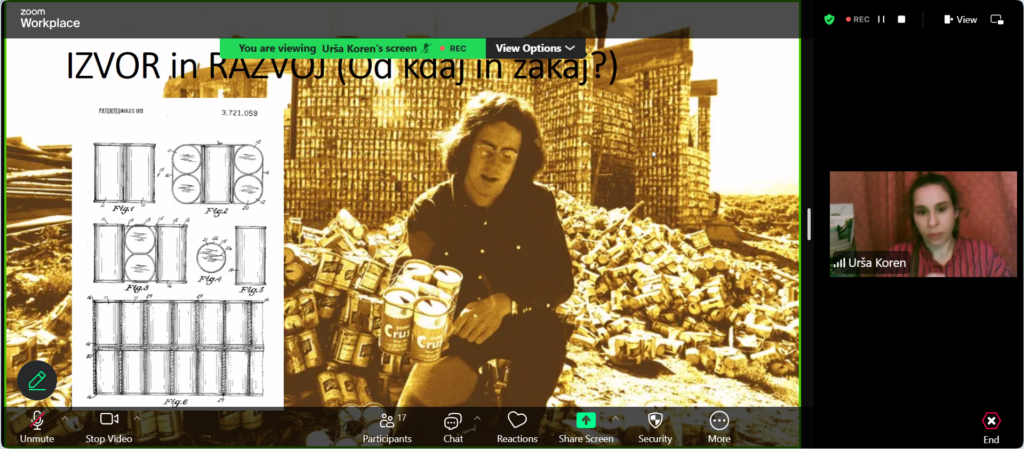
- Waste/Materials: Using tires, cans, and glass bottles as “bricks” significantly reduces the total volume of concrete needed for these “beehive” structures.
- Food: Integrated greenhouses allow for year-round production, even growing figs in desert climates.
Participant feedback or testimonials
Feedback indicated strong interest in practical applications and real-life examples. The Q&A highlighted interest in technical alternatives like compost heating via wood-chip fermentation. Discussion also addressed Slovenian bureaucratic hurdles and the lack of structural standards for natural materials like rammed earth, which penalizes off-grid autonomy.
Impact on CoP development
This lecture advances the mission of sharing sustainable practices across Europe, fostering a shift from passive consumption to “active participation.” The event supported the development of the Community of Practice by bringing together participants with shared interests in sustainable building and fostering initial exchanges and connections. We gathered new contacts for our CoP database. This was the third online session in development of Slovenian CoP so far.
Next steps or follow-up activities
We are already organizing the next CoP online session that will be about designing and crafting clothes from sustainable textiles, mainly from hemp.