Reflections from the GA 2026 – Intergenerational Transition and the Future of Community
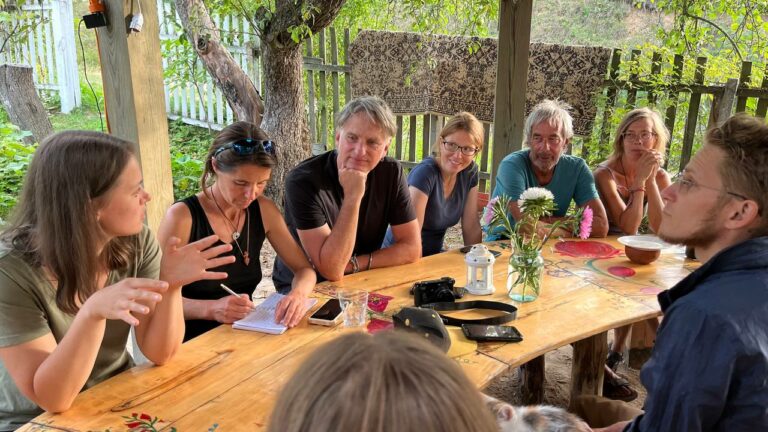
During a sharing circle taking place at the General Assembly 2026, a group of participants discussed intergenerational transition and the future of community.. The group created a text without confidential information, so the findings could be shared with the wider network.
Elaboration by: Sebastian (Tempelhof), Dominic (Glarisegg), Sonia (Glarisegg), Sade (GEN Finland), Ulrike (Siebenlinden), Gabriel (Siebenlinden), Leo (Heilhaus Gemeinschaft) and Capra (Damanhur)
The central question
How can an established community with a rich history and a strong founding vision become a place where new generations can genuinely live, participate, take responsibility and help shape the future?
This question goes beyond attracting younger people. It is about creating the conditions for real belonging and participation while honoring the experience, achievements and wisdom of those who have built and sustained the community over many years.
Five main barriers
1. Limited pathways into community life
New people may enter through work, volunteering, friendship or participation in activities, yet still find it difficult to understand how to become more deeply involved. A community can be open in principle while remaining difficult to enter in practice.
2. A gap between work, vision and communal life
People may work in community-related projects and strongly identify with their purpose without finding a clear pathway into the wider community and its vision. The relationship between working together, living together and carrying a shared vision needs to be made more visible and accessible.
3. Established structures can be difficult for newcomers to navigate
Long-standing communities naturally develop networks of relationships, informal knowledge, circles, traditions and ways of doing things. For newcomers, these structures may be hard to understand without clear orientation, personal relationships and active invitations to participate.
4. Exhaustion can make renewal difficult
Many long-term communities carry an enormous history of work, commitment and responsibility. When people are tired or overextended, even widely recognized needs for change can feel like one more burden. Generational transition therefore also requires attention to energy, recognition, joy and regeneration.
5. A new generation needs space to create, not only to inherit
Younger people may deeply value the history and wisdom of those who came before them. But to remain and take responsibility, they also need opportunities to experiment, make decisions, create new experiences and influence the future.
The challenge is to find a living balance between preserving what is essential and allowing something genuinely new to emerge.
Proposed next steps
A closing reflection
A community does not remain alive simply by preserving what was created in the past. Nor does renewal require abandoning its history. The deeper task is to create a bridge: one that honors the people who built the community, carries forward the wisdom and purpose at its heart, and gives new generations enough trust and space to make the vision alive in their own way.