Our fourth journey: Tips on joining a community
For many people drawn to intentional community, the biggest question is not why to live this way but how to begin. The path toward community can feel both exciting and overwhelming. There is inspiration, curiosity and longing, yet also uncertainty about where to start, what to expect and how to decide whether a particular place is the right match.
This fourth article in our series gathers practical advice from ecovillage members, newcomers and long-term residents across Europe. Their experiences highlight patterns that can ease the transition into community life and support a smoother, more grounded entry.
Taking time to get to know each other
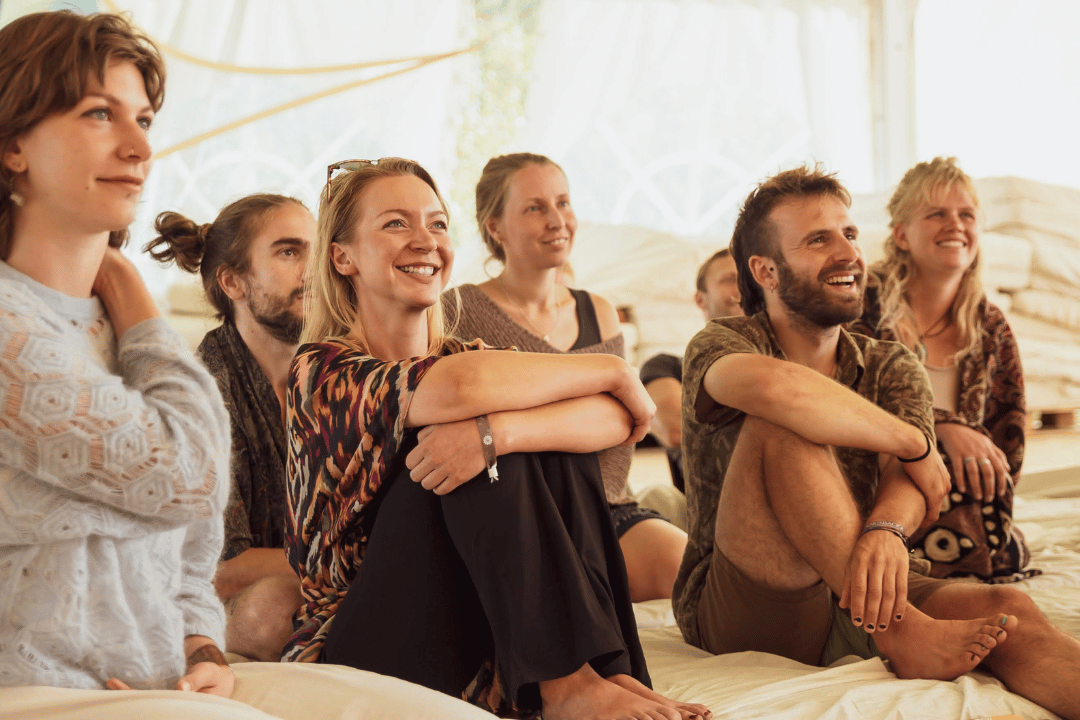
There is no shortage of books, guides and stories about the adventure of joining an intentional community. Yet one piece of advice appears almost everywhere: take your time. Entering a community is not something to rush and most established communities approach the process with equal care. They want to understand not only whether someone resonates with their values, but also whether everyday life together might genuinely work.
Many communities offer visitor programs, volunteering opportunities, seasonal gatherings or trial periods. These phases give a grounded, realistic experience of the community’s rhythm, agreements and social culture. Spending time on the land and getting a sense of daily routines helps future members understand not only what the community does but also how it feels. Long-term members often say that the first impressions during a short visit can be misleading. A week gives a taste; a month reveals the dynamics; a season shows the community in its full rhythm. Living alongside residents, joining work days and sharing meals offer insights into the community’s agreements, communication styles and unspoken cultural norms. In many places this getting-to-know-each-other process lasts a year or more, long enough for both the newcomer and the group to understand whether a future together is likely.
Charlie Lenglez, co-founder of Los Portales in southern Spain, once compared this process to dating or marriage: the commitment grows slowly through shared experience. Quick impressions often fade. Daily routines, conflict habits, celebrations and quiet moments reveal the deeper character of a community.
Two resources that can support the journey
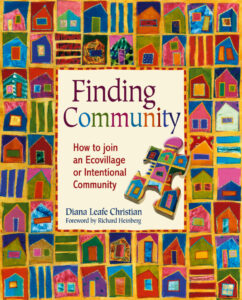
Finding Community presents a thorough overview of ecovillages and intentional communities and offers solid advice on how to research thoroughly, visit thoughtfully, evaluate intelligently and join gracefully. Useful considerations include:
- Important questions to ask of members and of yourself
- Signs of a healthy (and not-so-healthy) community
- Costs of joining and staying
- Common blunders to avoid
Another helpful perspective comes from an article on becoming a strong community candidate. It highlights something often overlooked: joining a community is not just about finding the right place. It also involves unlearning behavior patterns shaped by mainstream society, along with personal histories, traumas and coping strategies. Newcomers carry all of this with them. The encouraging part is that intentional communities provide unusually rich feedback loops for growth, as daily interactions often invite reflection and healing.
Understanding entry procedures
While each community structures its entry process differently, the overall patterns are quite similar. Some communities require formal applications, others offer visitor programs or multi-step integration phases. All aim to create an environment where both sides can genuinely explore compatibility. Taking this process seriously protects the stability of the community and gives newcomers the space to discover whether they truly want to invest their energy there.
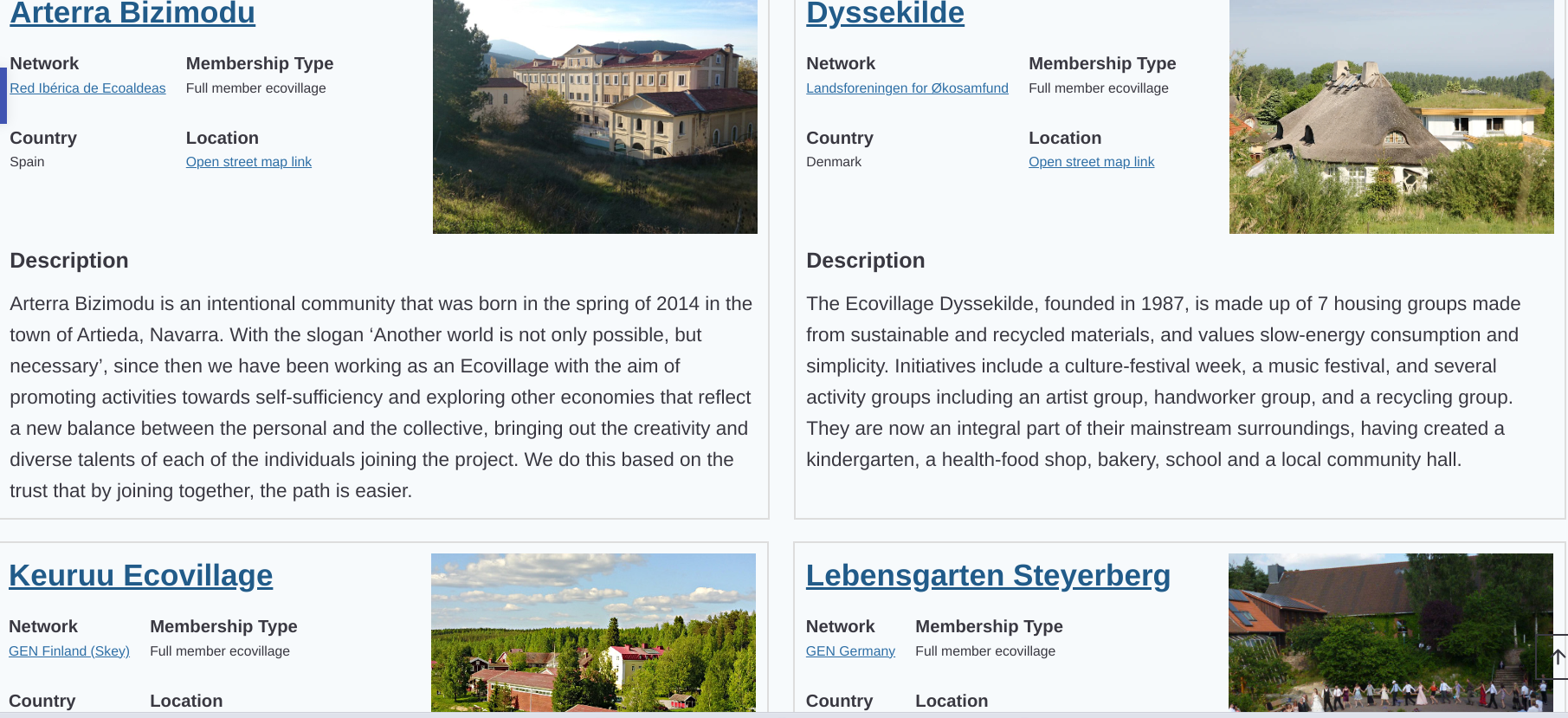
Many outline their procedures on their websites, and you can find the website and more information about many communities via our ecovillage map and directory.
Guidance from experienced community members
Many seasoned community members offer similar advice to those considering this path.
A number of them emphasise visiting different communities as one of the most valuable steps. Travelling, volunteering and experiencing a range of models—including communities that might sit outside one’s initial vision—helps build a broader understanding of what how community can look like. Some noted that even a brief stay in a very different project can reveal hidden preferences or open unexpected interests.
Several members also highlighted the importance of inner clarity. Questions like What am I really looking for? What matters most in my life? What kind of collaboration do I want to engage in? can be essential. The clearer the motivation, the more likely the path forward becomes visible. Another suggested that clearing unfinished business or “closing chapters” from one’s previous life can make the transition smoother.
Many also spoke about learning to read the feedback that naturally appears when visiting communities. How do situations feel in the body? What emotions arise? How do people respond to one’s presence and contributions? Paying attention to these subtle signals can be invaluable.
Alongside inner work, members recommend staying open to acquiring practical skills beyond one’s professional background. Many long-term residents spoke of having learned crafts, communication techniques, facilitation, gardening, repair work or governance tools such as sociocracy and Nonviolent Communication. These competencies make community life easier and also strengthen personal confidence.
There is also shared encouragement to trust the process. Several residents said that the right place tends to appear at the right time, especially when seekers remain curious and engaged without forcing decisions.
And woven through all the advice is a common reminder: there is no perfect community. One member said with humour that people should “stop searching for the perfect fit and instead look for a place that feels good enough to hold you.” Imperfection is part of the journey. Every community requires compromise, patience and courage. At some point, one has to make the leap and give it a real try.
Practical orientation for newcomers
Alongside these personal insights, some grounded considerations can make the journey smoother:
Spend extended time in the community. Immersing yourself in the daily rhythm helps you naturally sense whether the community feels like a good fit for you.
Listen before acting. Every community has reasons for its ways of doing things. Understanding them builds trust.
Explore what you bring. Communities thrive when members share their gifts, whether practical, artistic, social or organisational.
Learn community tools. Knowing how to navigate meetings, feedback rounds or conflict transformation makes arriving in a community much easier.
Stay courageous and flexible. One member summarised it well: “It doesn’t matter that much which path you take. What matters is having the courage to try things out and to invest again in yourself.”
Avoiding the endless search

Exploration is necessary, yet it can also become a trap. Some seekers get caught in a cycle of comparing communities without ever choosing one. Steffen from the Gastwerke community shared in our member interview that the search for the ideal place can stretch into a never-ending story. Sometimes, the next step becomes clear only after committing to a real experience.
Joining a community is as much an inner journey as an outer one. It invites patience, honesty, experimentation and a willingness to grow.
When the journey becomes an adventure
Finding and joining an intentional community is rarely linear. It often includes excitement, doubt, discovery and unexpected learning. But the process becomes richer and more grounded when approached not as a hunt for perfection but as a co-creative adventure.
Communities do not expect newcomers to arrive fully prepared. What they welcome is openness, motivation, curiosity and the courage to show up authentically. With that, the door to shared living opens in a natural way.
The journey toward community is ultimately not just about finding a place to live. It is an invitation to grow into a life shaped by cooperation, interdependence and mutual care. One step, one visit and one conversation at a time.
Further Resources for Preparing and Exploring Community Life
For those who wish to deepen their preparation, learn community tools, or spend time in established ecovillages, there is a growing set of courses, trainings and visitor programs across Europe. The following selection offers different ways to gain practical experience, learn facilitation methods and explore communal living from within:
Trainings on Community Building & Group Process
- Community Building – Introduction & Intensive Week (Schloss Glarisegg, Switzerland)
A highly regarded training in community-building processes and interpersonal awareness. - Community Compass
A structured framework for understanding collective living and working; widely used in European communities.
Visitor Weeks & Immersion Programs in Ecovillages
- Puertas Abiertas (Arterra Bizimodu, Spain)
An introduction to community life and systems at Arterra Bizimodu. - ZEGG Community Course (Germany)
A deep immersion into ZEGG’s culture, communication tools and community systems. - Getting-to-Know Weeks at ZEGG
Shorter introduction weeks to understand daily life, values and group processes. - Tamera Community Service (Portugal)
A work-and-study immersion into the daily functioning of Tamera. - Introduction to Tamera
An overview course about Tamera’s models, values and approach to community.
Ecovillage Design Education (EDE) Courses
- EDEs by Gaia Education
Internationally recognised training programs covering social, ecological, economic and worldview dimensions of community projects. - 12-week EDE (Avno Oasis, Denmark)
A longer-format EDE with a strong focus on practical community exposure.
These programs can serve as powerful stepping stones into communal living, offering structured learning, hands-on experience and the opportunity to sense whether community life resonates with your aspirations and personal journey.
The search for a community is often as meaningful as finding one. It brings questions to the surface that many people rarely ask in everyday life: What do I truly want? How do I show up in groups? What am I ready to commit to? Throughout our network, experienced members consistently emphasise that joining a community is not about discovering a flawless place but about entering a process of mutual learning.
Communities invite people to slow down, to visit, to listen deeply and to observe not only what happens around them but also what happens within. Trial periods, visitor weeks and long-term immersions help both sides find out whether daily life together is nourishing and sustainable. Tools and trainings can support this journey, but ultimately, the decisive moment often comes when someone dares to take a step. Not because they have found perfection, but because they have found a place where they feel both challenged and welcomed.
As many community members like to say, you can prepare, you can learn, and you can explore, but at some point, you simply begin. And with every beginning comes the possibility of shared growth, belonging and transformation.